Native Plants in Containers: Tiny Ecosystems on My Front Porch
One of the plants in my containers took three years to bloom.
In a world where we’re used to buying containers overflowing with flowers at the garden center, waiting three years for a bloom sounds ridiculous. But when it finally happened, it was stunning, and it changed how I think about container gardening.
I live in East Tennessee, where winters are relatively mild and rainfall does most of the watering for me. I’ve been growing native plants in containers for years now, and some of my original pots are still going strong today.
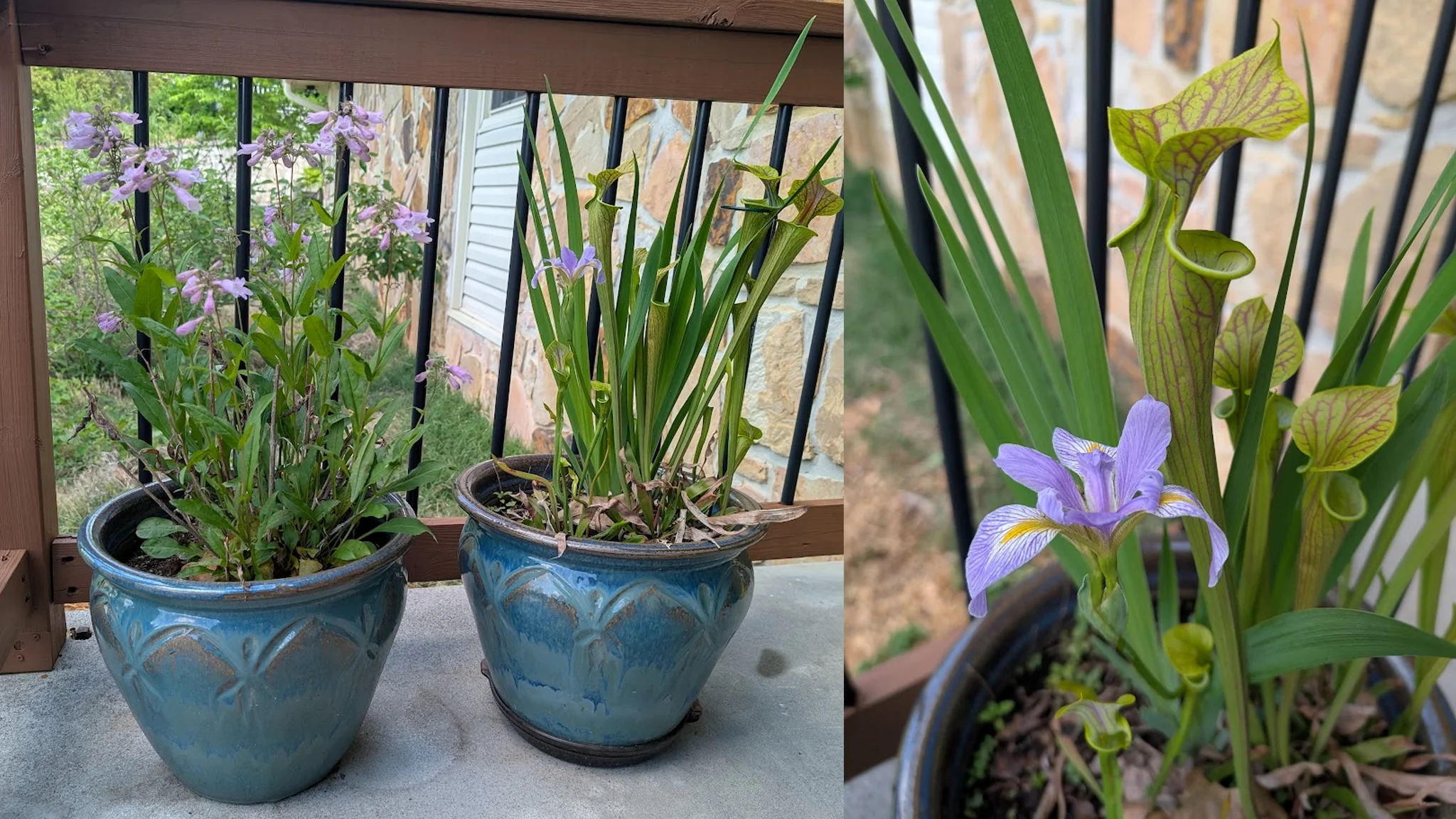
My first two containers were glazed ceramic pots. One held calico beardtongue (Penstemon calycosus), and the other held blue flag iris (Iris virginica) and yellow pitcher plant (Sarracenia flava). At the time, I wasn’t trying to create the perfect habitat garden. I was simply experimenting.
I grow native plants in containers even though I have plenty of room to garden in the ground. When people think about habitat gardening, they often imagine converting an entire yard, removing lawn, or installing a large native planting. Those projects are wonderful, but habitat gardening doesn’t have to start there. Sometimes it starts with a single pot. In fact, I think container gardening with native plants is one of the easiest ways to start building habitat, paying attention to the life around you, and discovering just how much life can fit into a small space.
Why I Grow Native Plants in Containers
Many people are drawn to container gardening because they have limited space. Maybe you only have a balcony or patio. Maybe you’re renting and want to take your plants with you when you move. Maybe containers are simply easier to manage because of mobility limitations. Those are all great reasons to grow native plants in pots. But I have a yard. I have planting beds. I can put plants directly into the ground whenever I want.
I still maintain containers because they scratch a different itch. To me, they’re self-contained little ecosystems within my larger ecosystem. I love watching how they develop over time. I love seeing which insects find them. I love noticing the changes from season to season and year to year. I love the challenge of pairing plants and containers in a way that’s both beautiful and beneficial to wildlife.
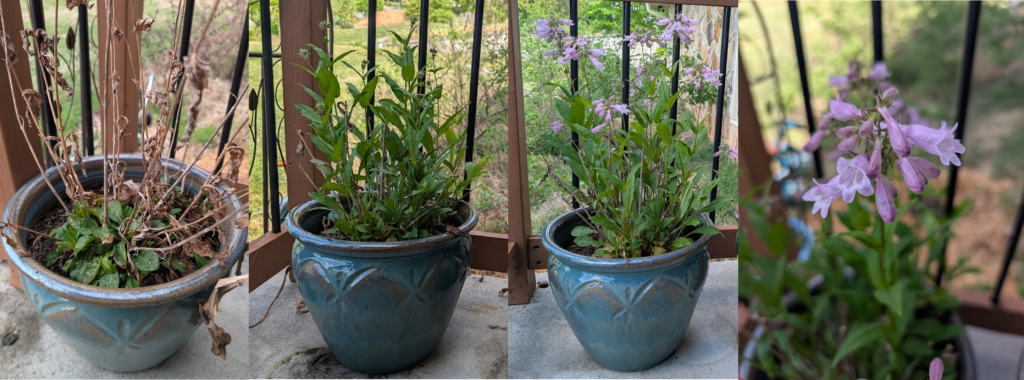
The calico beardtongue (Penstemon calycosus) pictured below is one of my oldest container plantings. Watching it emerge from dormancy each spring has become one of my favorite parts of the season.
When native plants are growing in containers on my front steps, I don’t have to go looking for nature. I encounter it every day.
Choosing Plants
When I’m selecting plants for containers, I tend to gravitate toward keystone plants whenever possible because I like getting more bang for my buck. If I’m going to dedicate space to a container, I want it supporting as much life as possible. That said, I also grow plants simply because I enjoy them.
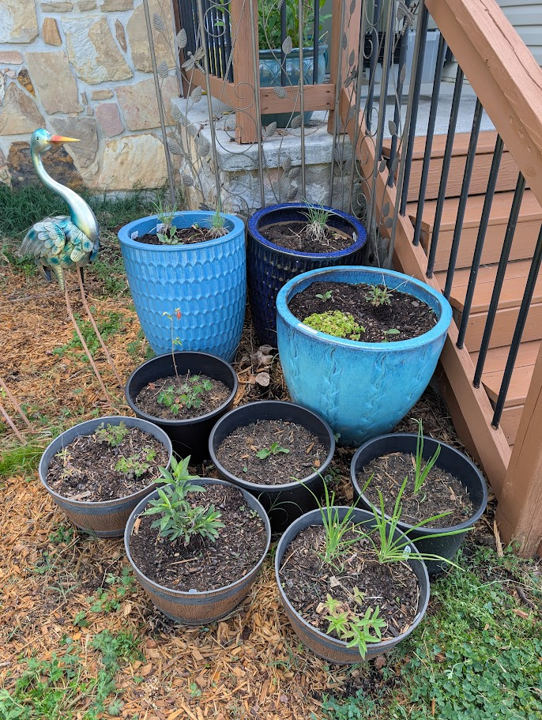
My biggest advice is to start by observing the conditions you already have and choosing plants accordingly. A full-sun plant is not necessarily going to thrive on a shady balcony. If a plant isn’t happy in one location, you can often move it. You can try different exposures, different arrangements, and different species. You’re not locked into a permanent decision, and honestly, experimentation is part of the fun.
Bigger Pots Make Life Easier
One of the biggest lessons I’ve learned is that larger containers tend to be more forgiving.
Some species can absolutely survive in one-gallon pots, but most native perennials seem happiest in containers that are at least three to five gallons. Larger, deeper-rooted species often appreciate even more room. For example, I have clustered mountain mint (Pycnanthemum muticum) thriving in a ten-gallon pot. Larger containers hold more soil, dry out more slowly, and give roots more room to develop.
I personally prefer plastic or glazed ceramic containers because they retain moisture better. Terracotta can certainly work, but because it loses water more quickly, you’ll want to pay closer attention to moisture levels, particularly during hot weather. I don’t enjoy watering constantly, and many native plants don’t require that level of attention once established. Most of my containers are watered almost entirely by rainfall. During periods of drought, or for species that prefer consistently moist conditions, I’ll occasionally supplement with additional water, but I’m not out there with a watering can every day.
Whatever container you choose, make sure it has drainage holes. One exception is my bog pot, which has a pie dish underneath it to help maintain the consistently wet conditions those plants prefer.
You Don’t Need Fancy Supplies
One thing I appreciate about container gardening is that it doesn’t have to be expensive.
Large decorative pots can get pricey very quickly, but there are plenty of affordable alternatives. I’ve found great deals through Facebook Marketplace, and Costco often carries large containers at surprisingly reasonable prices. Even simple nursery pots can be a great way to get started.
For soil, I’ve mostly used standard potting mix. I’ve also used garden soil amended with perlite to improve drainage. I don’t think most people need to overcomplicate this part. Pay attention to what your plant needs. If it prefers excellent drainage, incorporate materials like perlite or coarse sand to help excess water move through the soil more quickly. If it likes moisture, adjust accordingly. The goal isn’t to create the perfect soil mix, just to avoid putting a plant that likes dry feet into a container that stays soggy all the time.
Learning Patience
A lot of us are accustomed to buying plants in full bloom, enjoying them for a few months, and replacing them the following season. Perennials often ask for a little more patience.
My various phloxes (Phlox spp.), eastern red columbine (Aquilegia canadensis), and lanceleaf coreopsis (Coreopsis lanceolata) all bloomed during their first year. My blue flag iris (Iris virginica) did not.
It took three years before it flowered.
When it finally did, it was stunning.
And honestly, I think the wait made me appreciate it more.

So much influences how quickly a plant establishes and blooms. Pot size matters. Starting plant size matters. Weather matters. Species matter. Sometimes it’s simply a matter of time.
If something doesn’t bloom immediately, don’t assume you’ve failed. Give it a chance.
Things I’ve Learned Along the Way
Not everything goes perfectly, and that’s okay. One thing that surprised me is how much some taller species can flop in containers. This certainly happens in the ground too, but plants growing together often support one another. In containers, they’re sometimes standing alone.
My lanceleaf coreopsis (Coreopsis lanceolata) became floppy enough that I eventually tied it up to help keep it upright.
I also learned that small black nursery pots in full sun can be problematic, which in hindsight probably should have been obvious.
I nearly cooked a purple coneflower (Echinacea purpurea) that way. It recovered, but it taught me a valuable lesson about pot size, color, and heat. I don’t really view experiences like that as failures. They’re part of learning how different plants respond to different conditions.
Thinking Long-Term
Many native plants can happily live in containers for years, but eventually some will want more room. When that happens, you can move them into larger containers, plant them in the ground, or even give them away.
I’ve transplanted coneflowers (Echinacea spp.), eastern red columbine (Aquilegia canadensis), and various phloxes (Phlox spp.) from containers into my landscape. The phlox had spent two years in their pots before making the transition.
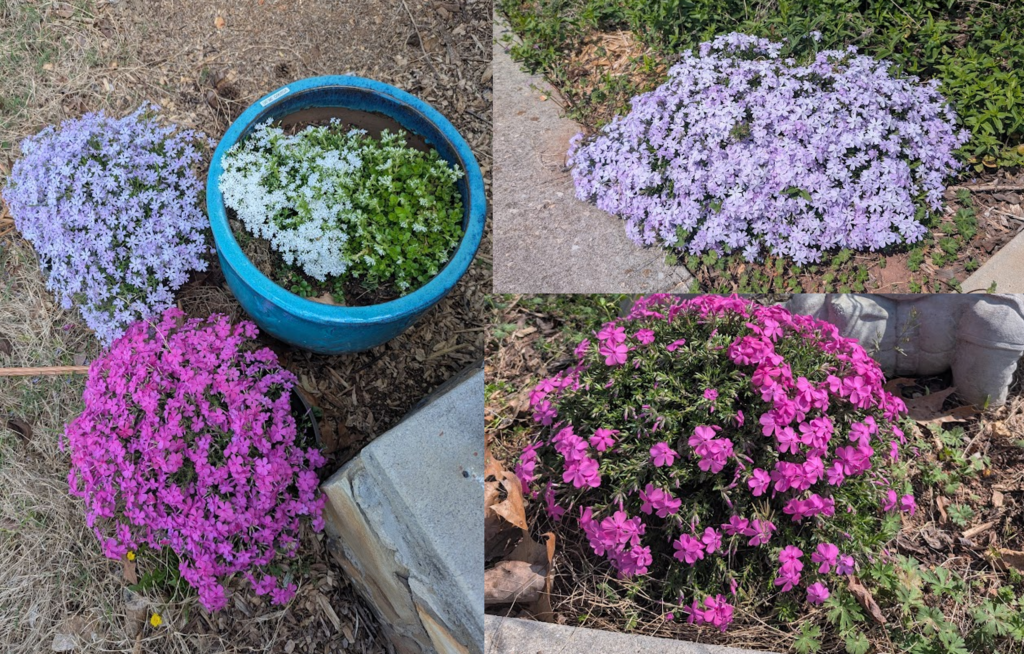
When I remove plants from containers, they’re often root-bound at the bottom. I typically trim the bottom of the root ball before planting, and I prefer to do this work in the fall when cooler temperatures reduce transplant stress.
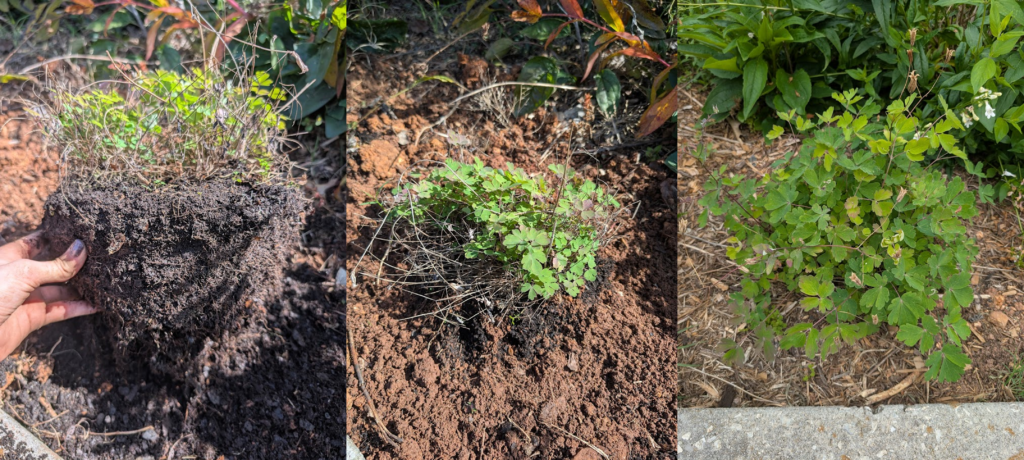
So far, all of those plants have successfully established and bloomed again after moving into the ground.
What I’d Tell Someone Just Getting Started
- Start with one pot.
- Choose a plant that excites you.
- Use a larger container than you think you need.
- Expect some trial and error.
- Give the plant time.
- Pay attention to the life it attracts.
The Best Part
For me, the best part isn’t the flowers. It’s the relationships. Every time I walk out the front door and see a bumblebee buzzing around a bloom, I get a little spark of joy.
What surprised me most wasn’t that the plants survived. It was how quickly wildlife found them. Even when I only had a handful of containers, bees, butterflies, and other insects showed up. The first time I noticed multiple species of bees visiting flowers on my front steps throughout the day, I realized these weren’t just containers anymore. They were habitat.
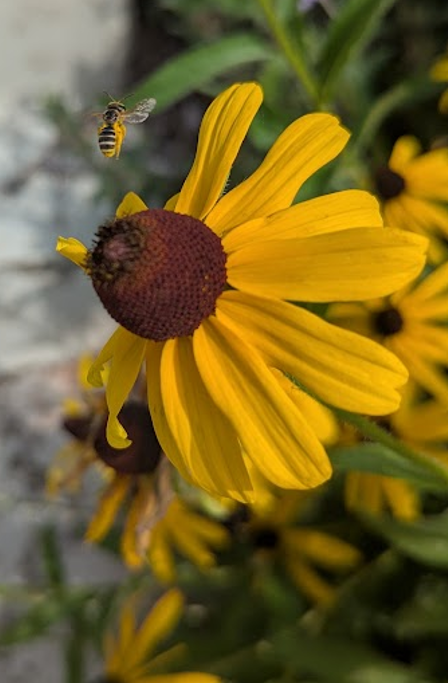
That shift changed the way I looked at them. I stopped seeing containers as decorations and started seeing them as living communities. Container gardening has made me pay closer attention. It has made me notice things I would have otherwise walked right past. It has given me an excuse to slow down and observe.
That’s what I love about native plant containers. They’re small, but they’re not insignificant. Every pot creates another place for insects to feed, shelter, and interact with the world around them. One container won’t solve the biodiversity crisis, but millions of small actions taken by ordinary people absolutely can.
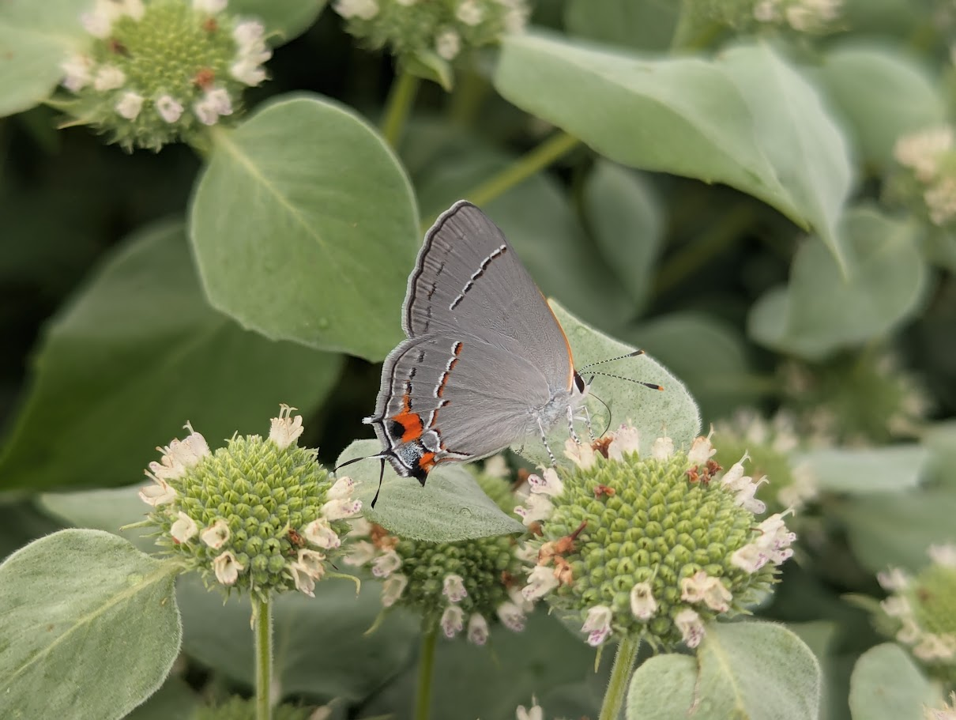
More than three years later, I still have some of those original containers. Not because I don’t have space to plant in the ground, but because I love watching the tiny worlds they’ve grown into.
If you’re thinking about trying native plants in containers, don’t worry about getting it perfect. Start small. Pay attention. The insects will find it, you’ll learn something, and you might discover that even one container can become a piece of habitat.
What a great introduction! This was really helpful in answering a lot of the questions I had about planting native on containers. I’m going to give it a try.
Great article. Very encouraging to new and long-time gardeners to take time to notice the insect lives the plants support.
Krista, what a good writer you are! Your enthusiasm and gratitude for these tiny worlds is infectious. I absolutely love what I can see of the combination of blue flag iris and pitcher plant: beautiful! Thank you for sharing your experience and joy.
Thank you so much Mary! More to come 🙂
Nice and informative article wonderful for city/apartment dwellers. I do put many of Ohio Natives in pots (milkweed, columbine, tall bellflower, black eyed Susans, the blazing star, lobelia and rough/button blazing star). However, I do find that these do not do so well on concrete or decks, so I put them along my driveway on the dirt and the roots take hold. Sometimes I just remove/cut the pot and leave the plant. Thank you
That is going to be my clustered mountain mint by the end of the summer. I can see the roots peeking through the drainage hole. Good thing they are very robust to disturbance and shouldn’t mind a nice trim this fall!